
Research & Development
Kleros advances the state of the art through interdisciplinary research at the intersection of economics, computer science, law, and governance.
Research & Development
Kleros advances the state of the art through interdisciplinary research at the intersection of economics, computer science, law, and governance.
Research & Development
Kleros advances the state of the art through interdisciplinary research at the intersection of economics, computer science, law, and governance.
Research
Research
Fellowship
Fellowship
Kleros Fellowship of Justice
The Kleros Fellowship of Justice brings together experts from different fields to collaborate with our team and advance research in decentralized justice.
Kleros Fellowship of Justice
The Kleros Fellowship of Justice brings together experts from different fields to collaborate with our team and advance research in decentralized justice.
Meet our Fellows
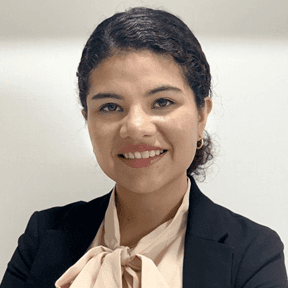
Diana Itzel Santana Galindo
Attorney
Diana I. Santana G. is a Mexican attorney graduated from Universidad Panamericana. She also holds an LLM in Comparative and International Dispute Resolution at Queen Mary's University of London. She has experience in different arbitration institutions such as the Korean Commercial Arbitration Board (KCAB International), the Beijing Arbitration Commission (BAC/BIAC), and the Hong Kong International Arbitration Centre (HKIAC). New, challenging issues have arisen from the present technological-era within e-commerce disputes, specifically regarding establishing localization of the jurisdictions involved and laws. Contemporary trade involves a large amount of daily purchase-sales that brings a bigger flow of data and therefore, more difficulty in establishing locality. Within Kleros, the attempt to localize the issues mentioned above can generate greater disadvantages for the speed that e-commerce requires. Hence, this research will analyze the advantages and disadvantages of delocalizing Kleros Justice as an alternative in the context of online international arbitration, in order to protect the effectiveness and validity of an arbitration agreement.
Mexico - Fellowship Batch 3
Decentralized Justice in International Arbitration
Diana Itzel Santana Galindo
Attorney
Diana I. Santana G. is a Mexican attorney graduated from Universidad Panamericana. She also holds an LLM in Comparative and International Dispute Resolution at Queen Mary's University of London. She has experience in different arbitration institutions such as the Korean Commercial Arbitration Board (KCAB International), the Beijing Arbitration Commission (BAC/BIAC), and the Hong Kong International Arbitration Centre (HKIAC). New, challenging issues have arisen from the present technological-era within e-commerce disputes, specifically regarding establishing localization of the jurisdictions involved and laws. Contemporary trade involves a large amount of daily purchase-sales that brings a bigger flow of data and therefore, more difficulty in establishing locality. Within Kleros, the attempt to localize the issues mentioned above can generate greater disadvantages for the speed that e-commerce requires. Hence, this research will analyze the advantages and disadvantages of delocalizing Kleros Justice as an alternative in the context of online international arbitration, in order to protect the effectiveness and validity of an arbitration agreement.
Mexico - Fellowship Batch 3
Decentralized Justice in International Arbitration
Participate in the Kleros Fellowship!
Participate in the Kleros Fellowship!
Follow Kleros on social media to find out when the next batch opens.

