
Research & Development
Kleros advances the state of the art through interdisciplinary research at the intersection of economics, computer science, law, and governance.
Research & Development
Kleros advances the state of the art through interdisciplinary research at the intersection of economics, computer science, law, and governance.
Research & Development
Kleros advances the state of the art through interdisciplinary research at the intersection of economics, computer science, law, and governance.
Research
Research
Fellowship
Fellowship
Kleros Fellowship of Justice
The Kleros Fellowship of Justice brings together experts from different fields to collaborate with our team and advance research in decentralized justice.
Kleros Fellowship of Justice
The Kleros Fellowship of Justice brings together experts from different fields to collaborate with our team and advance research in decentralized justice.
Meet our Fellows
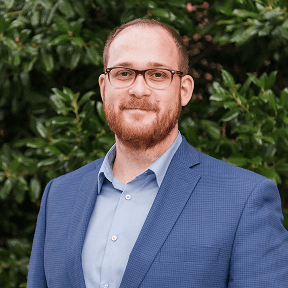
Elliot Talbert Goldstein
Assistant Director for Digital Marketing
Throughout his career, Elliot Talbert-Goldstein has conducted research and created tools that focus on using technology to improve communication and understanding. He has an MA in conflict resolution and mediation, is part of the Bosserman Center for Conflict Resolution at Salisbury University, and teaches mediation in the International Program in Conflict Resolution and Mediation at Tel Aviv University. Currently, he is assistant director for digital marketing in the Division of Professional Studies at UMBC (University of Maryland, Baltimore County). There are many risks in the steps along the supply chain that bring food from farm to table. For the consumer who buys the end product, for the companies that own the production processes, and for the workers who perform the labor required in fields and facilities. Certification and regulation frameworks that reduce risks for each party while increasing transparency make a major impact on food production and consumption by protecting consumers, workers, and companies. Those frameworks today can be drastically improved using blockchain technology and companies are looking for ways to implement distributed ledgers in order to create new value. The following case study analyzes a real-world example of designing a blockchain application that improves the confidentiality, integrity, and availability of data for the certification for food growers, processors, sellers, and, ultimately, consumers. The research is designed to inform key challenges and opportunities in using blockchain for regulation in the supply chain and regulatory frameworks more broadly.
USA - Fellowship Batch 2
Labor Certification on the Blockchain
Elliot Talbert Goldstein
Assistant Director for Digital Marketing
Throughout his career, Elliot Talbert-Goldstein has conducted research and created tools that focus on using technology to improve communication and understanding. He has an MA in conflict resolution and mediation, is part of the Bosserman Center for Conflict Resolution at Salisbury University, and teaches mediation in the International Program in Conflict Resolution and Mediation at Tel Aviv University. Currently, he is assistant director for digital marketing in the Division of Professional Studies at UMBC (University of Maryland, Baltimore County). There are many risks in the steps along the supply chain that bring food from farm to table. For the consumer who buys the end product, for the companies that own the production processes, and for the workers who perform the labor required in fields and facilities. Certification and regulation frameworks that reduce risks for each party while increasing transparency make a major impact on food production and consumption by protecting consumers, workers, and companies. Those frameworks today can be drastically improved using blockchain technology and companies are looking for ways to implement distributed ledgers in order to create new value. The following case study analyzes a real-world example of designing a blockchain application that improves the confidentiality, integrity, and availability of data for the certification for food growers, processors, sellers, and, ultimately, consumers. The research is designed to inform key challenges and opportunities in using blockchain for regulation in the supply chain and regulatory frameworks more broadly.
USA - Fellowship Batch 2
Labor Certification on the Blockchain
Participate in the Kleros Fellowship!
Participate in the Kleros Fellowship!
Follow Kleros on social media to find out when the next batch opens.

